
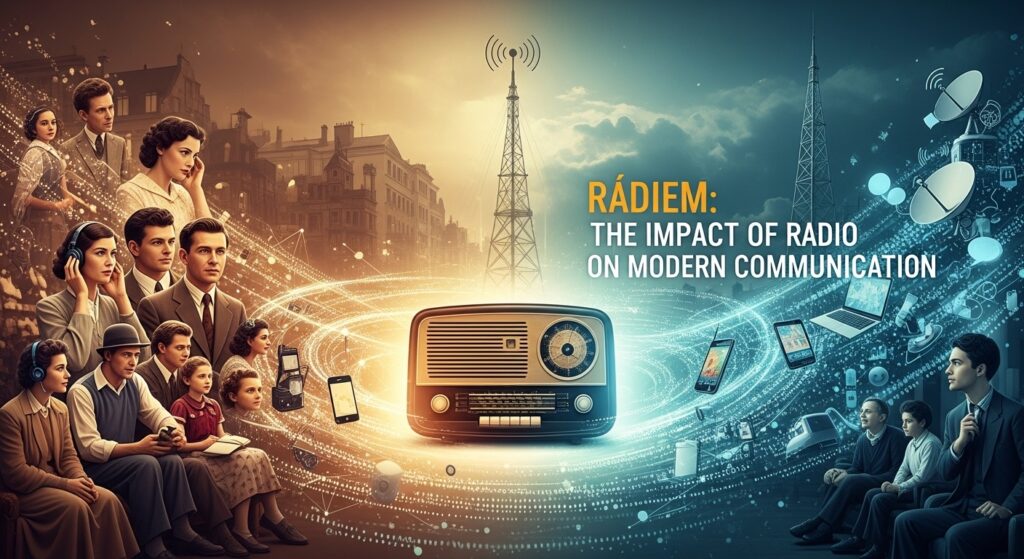
Rádiem has been a staple in communication for decades, shaping how we connect and share information. From its humble beginnings to the technological marvels of today, radio has carved out an essential role in our daily lives. As we tune into our favorite stations or catch breaking news updates, it’s clear that this medium is more than just background noise; it’s a powerful tool that continues to evolve. Let’s dive into the rich history of Rádiem and explore how it impacts modern communication now more than ever.
The evolution of radio technology
Radio technology has undergone remarkable transformations since its inception. In the late 19th century, pioneers like Guglielmo Marconi laid the groundwork with early wireless communication methods. His experiments paved the way for broadcasting as we know it today.
The introduction of amplitude modulation (AM) in the 1920s revolutionized sound quality and accessibility. This was followed by frequency modulation (FM) in the 1930s, which offered clearer audio and became a favorite among music lovers.
As technology advanced, digital radio emerged in the late 20th century. It provided enhanced sound fidelity and numerous channels within limited bandwidth.
Today, internet radio streams content globally, breaking geographical barriers. Smart devices have made listening more convenient than ever. As radio continues to evolve, it adapts effortlessly to new technologies while maintaining its core mission: connecting people through shared experiences.
The role of radio in modern communication
Radio plays a crucial role in modern communication, serving as a bridge between information and audiences worldwide. It offers real-time updates on news, weather, and emergencies, making it an essential tool for staying informed.
Its ability to reach remote areas where internet access may be limited enhances its importance. For many communities, radio remains the primary source of information.
Moreover, radio fosters engagement through live discussions and calls from listeners. This creates a sense of community among participants while allowing diverse voices to be heard.
With podcasts also gaining traction, traditional radio has adapted by merging with digital platforms. This blending ensures that audiences can enjoy content anytime and anywhere they choose.
The immediacy of radio continues to resonate deeply with listeners who crave instant connection amid an ever-changing media landscape. Its blend of entertainment and information keeps it relevant in today’s fast-paced world.
Advantages and disadvantages of using radio for communication
Radio communication boasts several advantages. It provides real-time information and updates, essential during emergencies. Its wide reach means that even remote areas can access vital news and broadcasts.
Another benefit is the low cost of radio technology compared to other forms of media. Setting up a radio station or accessing existing frequencies requires minimal investment.
However, there are drawbacks as well. Radio relies heavily on audio content, which may exclude those with hearing impairments. Additionally, not all demographics engage with radio today—especially younger generations who favor visual platforms.
Signal interference can also impact clarity and reliability, leading to frustrating listening experiences at times. Despite these challenges, many still find value in the immediacy and authenticity that radio offers for communication purposes.
Radio’s impact on society and culture
Radio has woven itself into the fabric of society, shaping cultural identities and community connections. It serves as a platform where diverse voices resonate across different backgrounds.
Through storytelling, music, and news broadcasts, radio reflects societal values while influencing public opinion. Local stations often highlight regional issues that matter most to their listeners.
Culturally, radio has been a catalyst for movements—spreading messages of change far and wide. From civil rights to environmental awareness, its reach can mobilize communities in ways other mediums struggle to achieve.
Moreover, radio fosters a sense of belonging. Listeners tune in not just for information but also for companionship during solitary moments. This emotional connection is profound; it transcends geographical barriers and unites people through shared experiences and interests.
As genres evolve—from jazz to hip-hop—radio continues to be an essential part of humanity’s creative expression.
The future of radio in a digital age
As we navigate through the digital age, radio is adapting rather than fading away. The rise of streaming services has transformed how audiences consume audio content. Yet, traditional radio finds new life online.
Podcasts are gaining traction, and many stations are creating their own to attract younger listeners. This shift allows for diverse topics and niches that weren’t possible before.
Moreover, smart speakers have integrated radio into daily routines seamlessly. People can now listen effortlessly while multitasking at home or on the go.
Social media also plays a crucial role in promoting radio shows and engaging with listeners in real-time. It creates a community around local broadcasts.
The continued evolution of technology suggests that Rádiem will persist as an influential medium in communication, even amidst changing landscapes. Its adaptability might just be its strongest asset moving forward.
Why radio remains a powerful tool in modern communication
Radio continues to hold a significant place in modern communication due to its accessibility and immediacy. It reaches diverse audiences, regardless of location or socio-economic status.
With just a simple device, anyone can access information, entertainment, and news without the need for internet connectivity. This makes radio particularly vital during emergencies when other forms of communication might fail.
Moreover, radio fosters community connection. Local stations often share relevant content that resonates with their listeners’ daily lives, creating a sense of belonging.
In an age dominated by visual media, the power of audio storytelling remains unparalleled. Radio engages listeners’ imaginations and provides an intimate experience that video cannot replicate.
Additionally, podcasting has rejuvenated traditional broadcasting formats while keeping radio’s essence alive through on-demand audio experiences. This evolution ensures that radio adapts alongside technological advancements yet retains its core strengths in human connection.
Conclusion
The world of communication has seen profound changes over the decades, yet radio remains a steadfast presence. Rádiem exemplifies how this medium has adapted and evolved while maintaining its core essence. From its humble beginnings to becoming an integral part of daily life, radio continues to connect people in ways that modern technology sometimes overlooks.
As digital platforms rise, they don’t diminish radio’s relevance. Instead, they complement it by offering new formats and channels for engagement. The immediacy and intimacy of radio broadcasts forge connections that resonate deeply with listeners.
Radio is not just about information; it’s a cultural touchstone that shapes societies. It provides entertainment and promotes dialogue on pressing issues, ensuring diverse voices are heard in every corner of the globe.
Looking ahead, the future holds exciting possibilities for Rádiem as it morphs alongside emerging technologies. Podcasting, streaming services, and social media integrations promise to breathe new life into traditional broadcasting formats.
Rádiem endures as a powerful tool because it adapts while keeping human connection at the forefront. Its ability to influence society remains unmatched—an enduring testament to the potency of sound waves carrying stories across distances unimagined before.