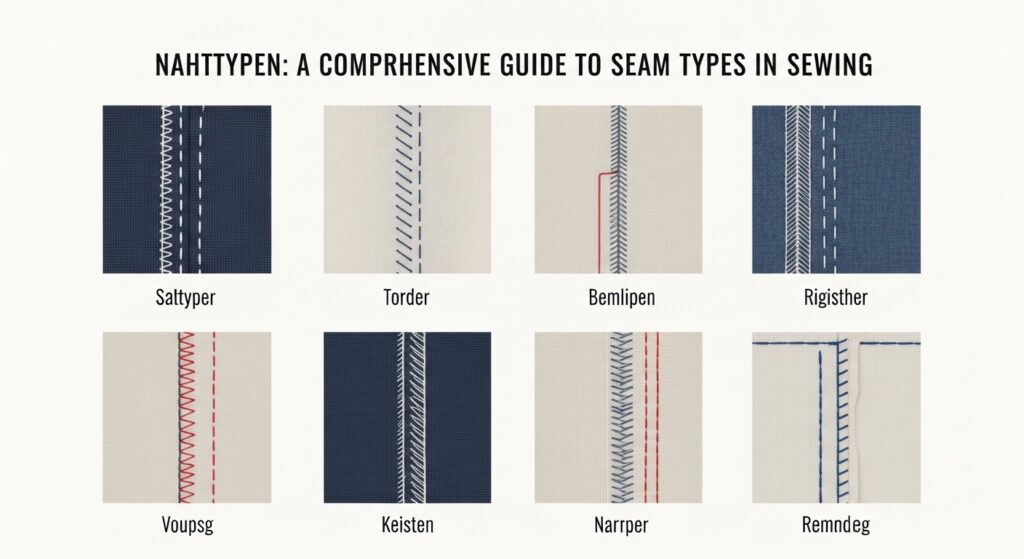
Sewing is a delightful craft that allows you to express your creativity and bring your ideas to life. One of the essential aspects of sewing lies in understanding the different seam types, or Nahttypen, that can make or break your project. Whether you’re stitching a simple garment or embarking on an intricate design, knowing which seam type to use is crucial for achieving professional-looking results.
As you dive into the world of seams, you’ll discover various styles and techniques tailored for specific fabrics and designs. This guide will explore basic stitches, decorative options, and specialty seams, ensuring you’re equipped with all the knowledge needed for successful sewing endeavors. So grab your fabric and thread; let’s unravel the fascinating world of Nahttypen!
Basic Seam Types:
When it comes to sewing, understanding the basic seam types is essential. They form the backbone of any project you undertake.
The straight stitch is the most common type. It’s versatile and creates a clean finish for seams that need strength and durability.
Next up is the overlock stitch. This one helps prevent fraying edges, giving your fabric a polished look while allowing for stretch in knit fabrics.
Each basic seam type has its unique benefits suited to different materials and patterns. Choosing wisely can elevate your work’s overall appearance and functionality.
Experimenting with these stitches will enhance your skills significantly. Whether you’re making garments or home décor, mastering these basics will empower you as a sewist!
Straight Stitch
The straight stitch is the backbone of sewing. It’s simple yet incredibly versatile, making it a staple for both beginners and seasoned sewists.
This type of seam creates a clean line that holds fabric pieces together effectively. Whether you’re piecing quilt blocks or constructing garments, the straight stitch delivers strength without bulk.
To achieve the best results, adjust your machine’s tension and choose an appropriate needle based on your fabric type. Cotton fabrics work well with universal needles, while knits may require ballpoint needles to avoid snags.
When working with curves or corners, take it slow. Pivoting at corners provides neat finishes. Practice on scraps if you’re unsure about technique; it builds confidence and skill.
With countless applications in various projects, mastering the straight stitch opens doors to endless creative possibilities in your sewing journey.
Overlock Stitch
The overlock stitch is a favorite among sewists for its versatility and professional finish. This stitch not only secures the fabric layers together but also prevents fraying along the edges.
Using a serger, you can create this stitch with ease. The machine trims excess fabric while sewing, resulting in clean edges that are essential for knit fabrics or delicate materials.
One of the standout features of an overlock stitch is its Nahttypen. This quality allows garments to move freely without compromising their structure. It’s particularly useful when working on activewear or any project requiring flexibility.
Experimenting with different thread colors can add interesting visual elements to your seams. Whether you’re looking for subtlety or boldness, an overlock seam provides both function and style in your sewing projects.
Decorative Seam Types:
Decorative seam types add flair and personality to your sewing projects. They’re not just functional; they also elevate the aesthetic appeal of garments.
One popular option is the Hong Kong seam finish, which features a bias binding on raw edges. This technique showcases fabric choices beautifully while preventing fraying.
Another stunning example is the flat-felled seam, often found in jeans. It provides strength and durability while creating a polished look that’s hard to resist.
Then there’s the piped seam, where piping or cord adds depth and texture between two layers of fabric. This detail can transform even a simple design into something extraordinary.
Don’t overlook decorative Nahttypen topstitching either! Using contrasting thread can highlight seams and add visual interest without overwhelming your overall design.
Hong Kong Seam Finish
The Hong Kong seam finish is a fantastic technique for those looking to add a touch of elegance to their sewing projects. This method not only prevents fraying but also gives your seams a polished appearance.
To create this finish, you start by using bias tape. It wraps around the raw edges of your fabric, securing them while providing a beautiful contrast that can enhance the overall design. Choosing contrasting or complementary colors can elevate your garment’s aesthetic.
This seam type works wonders on lightweight fabrics like silk or chiffon. It’s ideal for unlined jackets and skirts where you want inner seams to look just as good as outer ones.
Mastering the Hong Kong seam finish might take some practice, but the result is well worth it. Your garments will exude professionalism and style with this simple yet effective technique at play.
Specialty Seam Types:
Specialty seam types bring a unique flair to your sewing projects. They are designed for specific purposes, enhancing both functionality and aesthetics.
The bound seam is one such Nahttypen example. This technique encases raw edges with fabric binding, creating a polished look while preventing fraying. It’s perfect for unlined garments or when working with delicate fabrics.
Another fascinating option includes princess seams. These curved seams contour the garment to fit the body more closely, offering a tailored appearance without using darts. They work wonders in dresses and fitted tops, providing both structure and elegance.
Choosing specialty seams can elevate your creations from ordinary to extraordinary. Each type serves its purpose and adds character to your work, allowing you to explore new styles and techniques as you sew.
Bound Seam
The bound seam is a fantastic choice when you want to give your garment a polished look. This technique involves encasing the raw edges of the fabric with bias tape or strips of fabric.
One significant advantage is its durability; it prevents fraying and extends the life of your project. It’s particularly useful for unlined jackets, skirts, or any item where inner seams might be visible.
Creating a bound seam can seem intricate, but with practice, you’ll find it straightforward. Simply align the bias tape along the edge and stitch securely. The result is not only functional but also visually appealing.
For those experimenting with Nahttypen different fabrics, this seam type accommodates various materials well. Whether you’re using cottons or silks, a bound seam adds an extra flair that elevates your sewing game considerably.
Princess Seams
Princess seams are a sewing technique that adds elegance and shape to garments. They create a flattering silhouette by running from the shoulder or armhole down to the hem.
This seam type is ideal for fitted dresses, blouses, and jackets. Unlike traditional darts, princess seams provide a seamless look while allowing for more fluid movement.
Sewing them requires precision. You’ll want to ensure your fabric lies smoothly as you stitch, which enhances the garment’s overall fit.
These seams can be used on various fabrics but work particularly well with soft materials like cotton or silk that drape nicely without adding bulk.
Experimenting with princess seams can elevate your sewing projects, giving even simple patterns a sophisticated touch. The added curves can transform basic shapes into something truly special.
Choosing the Right Seam Type for Your Project
Choosing the right seam type for your project can make all the difference. It’s essential to consider both functionality and aesthetics.
Think about the fabric you’re using. Lightweight materials may require different seams compared to heavier fabrics. A straight stitch might suffice for cotton, while an overlock could be better suited for knits.
Next, assess the garment’s purpose. Will it endure heavy wear? Nahttypen for more robust seams like a flat-felled seam that offers durability and a neat finish.
Don’t forget about design elements! Decorative seams can elevate your project, adding visual interest without compromising structure.
Ensure ease of sewing aligns with your skill level. Some techniques demand advanced skills; choose ones that match your confidence in sewing prowess while still challenging yourself creatively.
Tips and Tricks for Sewing Perfect Seams
Sewing perfect seams requires a bit of practice and attention to detail. Start by choosing the right needle for your fabric type. A sharp needle works wonders on lightweight materials, while a ballpoint is better suited for knits.
Always press your seams as you go. This small step can transform the look of your project dramatically. Use an iron set to the appropriate temperature for your fabric, and don’t forget to use steam when necessary.
Additionally, consider using seam guides or marked lines on your sewing machine bed. These tools help maintain a consistent seam allowance throughout.
When it comes to thread tension, adjust it according to fabric thickness. Too tight can cause puckering; too loose leads to weak seams.
Always test stitches on scrap fabric before starting on your actual project. This allows you to fine-tune settings without compromising your main piece.
Conclusion
Understanding the various Nahttypen can significantly enhance your sewing projects. Each seam type serves a specific purpose and provides different benefits, whether you’re aiming for strength, aesthetics, or functionality.
By choosing the right seam type for your fabric and project requirements, you can achieve professional results that elevate your work. From basic straight stitches to intricate decorative seams like the Hong Kong finish, each technique adds its unique flair.
With practice and attention to detail, perfecting your seams becomes easier over time. So explore these techniques further in your next sewing endeavor and let creativity guide you on this exciting journey into the world of Nahttypen!