
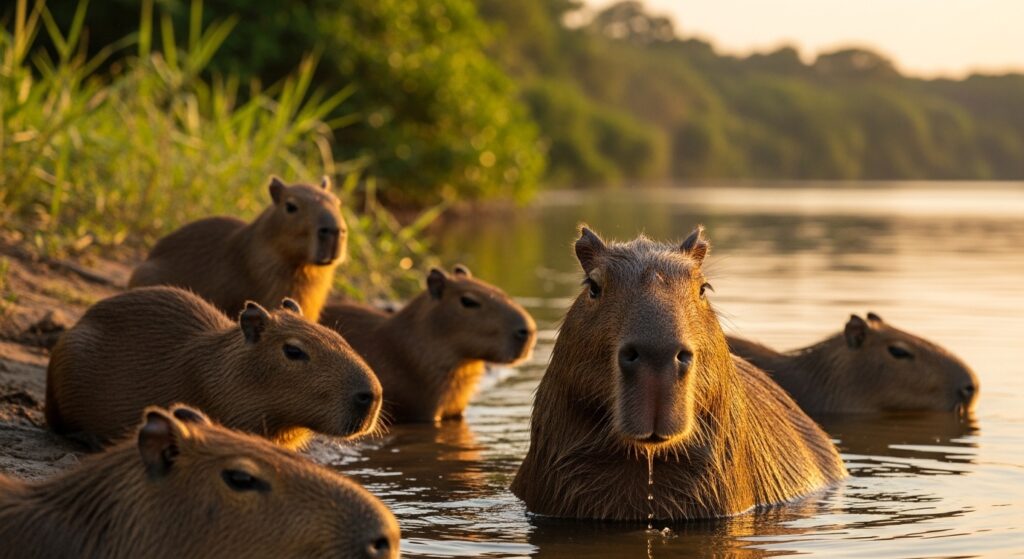
Capybaras are often referred to as the gentle giants of the animal kingdom, and for good reason. These fascinating creatures have a calm demeanor that endears them to many. With their large, rounded bodies and expressive faces, they draw attention wherever they roam.
Originating from South America, capybaras are the largest rodents in the world. Their unique social structure and friendly nature make them captivating to observe. Whether lounging by riversides or interacting with other wildlife, these animals embody tranquility.
But there’s so much more beneath their tranquil surface. From their interesting diet to their vital role in ecosystems, capybaras offer us numerous lessons about cooperation and coexistence. Let’s dive deeper into what makes these remarkable mammals truly special.
Physical Appearance and Habitat
Capybaras are the largest rodents in the world, reaching lengths of up to four feet and weighing as much as 150 pounds. Their bodies are robust and covered in coarse, water-repellent fur that ranges from brown to reddish-brown. This adaptation helps them thrive in their wetland habitats.
These gentle giants have short legs and a slightly flattened head, giving them an endearing appearance. Their eyes sit high on their heads, allowing them to see above water while swimming—an essential skill for evading predators.
Capybaras inhabit grasslands, savannas, and dense forests near rivers or lakes throughout South America. They prefer areas with abundant vegetation where they can easily access food and shelter. Being semi-aquatic creatures, they often take leisurely swims or lounge by the water’s edge during hot days.
Diet and Behavior
Capybaras are herbivores, primarily munching on grasses and aquatic plants. Their diet is high in fiber, which helps them digest efficiently. They also enjoy fruits and vegetables when available.
These creatures are social animals that thrive in groups. You’ll often find them lounging together near water bodies. This camaraderie plays a role in their survival; it offers protection against predators.
Capybaras spend much of their time grazing during the day, but they can be active at night as well. When startled, they have a unique behavior—they freeze for a moment before deciding to flee or stay put.
Grooming each other is common among capybaras, strengthening bonds within the group. Their calm demeanor makes them fascinating subjects for observation in both wild and domestic settings.
Unique Characteristics and Adaptations
Capybaras possess several intriguing characteristics that set them apart in the animal kingdom. As the largest rodent, they can weigh up to 150 pounds and reach nearly four feet long. Their robust bodies are built for swimming, with partially webbed feet that aid their movement in water.
These gentle giants have a unique social structure. Living in groups of 10 to 20 individuals fosters a strong sense of community and safety. They communicate through various sounds, including barks, whistles, and purrs.
One fascinating adaptation is their ability to regulate body temperature efficiently. With minimal fur on parts of their bodies, capybaras can stay cool while soaking in water during hot weather. This natural behavior helps them thrive in their native habitats—lush wetlands and riversides across South America.
Their diet consists mainly of grasses and aquatic plants, showcasing an incredible digestive system designed for breaking down tough vegetation effectively.
The Importance of Capybaras in Their Ecosystem
Capybaras play a vital role in their ecosystems. As herbivores, they help maintain plant growth by grazing on grasses and aquatic vegetation. This creates a balanced environment, preventing overgrowth of certain plants.
Their presence supports various wildlife species. Many birds and small mammals find shelter around capybara habitats. The animals also serve as prey for larger predators, contributing to the food chain.
Moreover, capybaras are natural landscapers of wetlands. Their movements through muddy areas create channels that improve water flow and promote healthier aquatic systems.
By acting as social facilitators within their groups, they enhance biodiversity. Their interactions with other species foster an intricate web of life in which different organisms thrive together.
These gentle giants truly embody the interconnectedness of nature’s design. Protecting them ensures the stability of their habitat and all its inhabitants.
Interactions with Humans and Domestication
Capybaras have a fascinating relationship with humans. These gentle giants are often found in zoos and wildlife parks, where they capture the hearts of visitors. Their calm demeanor makes them ideal for educational programs focused on conservation.
In some regions, people keep capybaras as pets. They form strong bonds with their owners and can even coexist peacefully with other animals. However, this domestication requires commitment and understanding of their social needs.
Their friendly nature allows for unique interactions. Capybaras enjoy being petted and groomed, often leaning into affection from humans. This has led to viral videos showcasing their playful antics alongside dogs or children.
Despite these charming traits, potential pet owners must ensure they provide adequate space and companionship for these social creatures to thrive. Respecting their wild instincts is crucial in maintaining a healthy relationship between capybaras and humans alike.
The Future of Capybaras: Threats and Conservation Efforts
Capybaras face numerous threats in the wild. Habitat destruction is a significant concern, primarily due to deforestation and agriculture expansion. As wetlands shrink, these gentle giants struggle to find suitable living spaces.
Hunting also poses a risk. In some regions, capybaras are hunted for their meat and fur. This pressure can lead to declining populations if not managed properly.
Conservation efforts are underway to protect them. Organizations work tirelessly on habitat restoration projects and legal protections that prevent overhunting. These initiatives aim to create safe environments where capybaras can thrive.
Education plays a crucial role as well. Raising awareness about their ecological importance helps foster respect for this unique species among local communities.
With focused actions and community involvement, there’s hope for the future of capybaras in their natural habitats around the world.
Why We Should Appreciate These Gentle Giants
Capybaras are more than just adorable creatures; they embody a unique blend of charm and gentleness that captivates many. Their calm demeanor makes them fascinating subjects for observation. Watching these animals interact peacefully in their groups is a lesson in social harmony.
Their role as ecosystem engineers also deserves recognition. By grazing on vegetation, capybaras help maintain the balance in their habitats, supporting other wildlife. This interconnectedness illustrates how every species contributes to its environment.
Moreover, capybaras have been shown to bring joy and comfort to humans who encounter them. Whether through documentaries or visits to sanctuaries, their warm presence has the power to uplift spirits.
As we learn more about these gentle giants, it’s essential for us to recognize their significance both ecologically and emotionally. Appreciating capybaras enriches our understanding of nature’s wonders while fostering compassion towards all living beings.
Conclusion
Capybaras are truly fascinating creatures that deserve our admiration and respect. These gentle giants have captured the hearts of many with their calm demeanor and social nature. Their unique adaptations to both terrestrial and aquatic environments make them remarkable survivors in the wild.
Understanding their role within ecosystems emphasizes how integral they are to maintaining balance in their habitats. They facilitate a diverse range of interactions among species, serving as prey for larger predators while also contributing to vegetation management through grazing.
As we navigate a world facing numerous environmental challenges, it is crucial to recognize the threats capybaras face due to habitat loss and climate change. Conservation efforts can help ensure these animals continue thriving in the wild.
With such an endearing presence, capybaras remind us of the beauty of wildlife and our responsibility towards protecting it. By appreciating these astonishing mammals, we contribute positively toward fostering a deeper connection with nature, inspiring future generations to cherish all living beings on this planet.